
Water Heater Help in Barrie: Tank and Tankless
Call for pricing
Whether a tank runs cold, rumbles or leaks, or a tankless unit throws an error code, we find the failed part and explain whether repair or replacement makes sense.
- Licensed and insured plumbers
- 11 years serving Barrie
- On-time appointments
- Upfront pricing before work starts
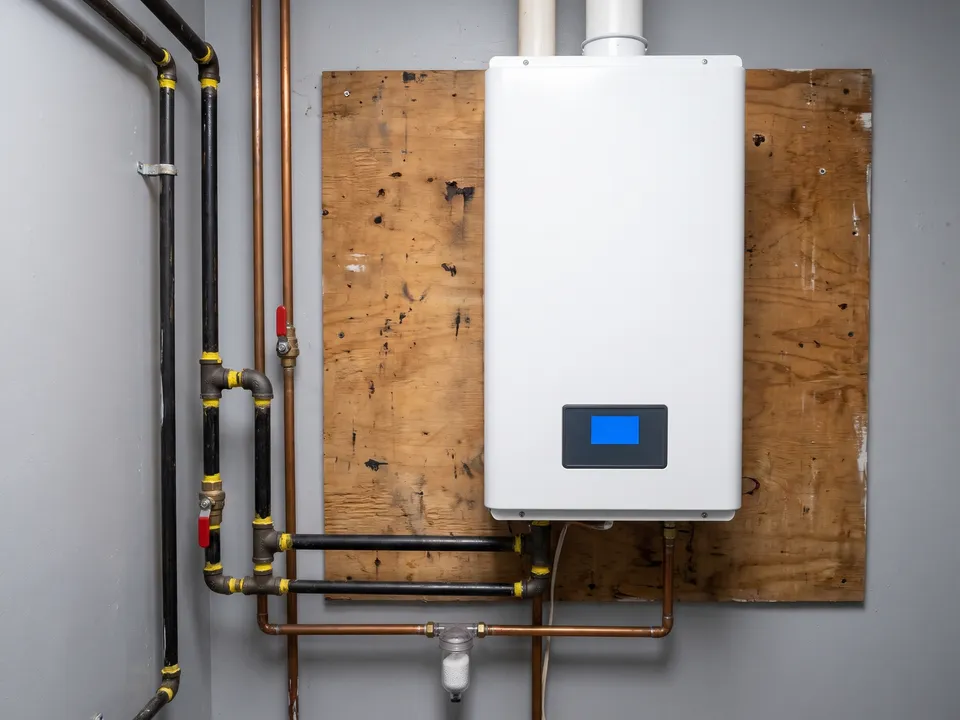
We repair and install both tank and tankless (on-demand) water heaters. A tank unit has a few components behind most faults: heating elements or a gas burner and thermocouple, a thermostat, the anode rod, the temperature and pressure relief valve and the tank itself. A tankless unit has no tank, so its faults come from gas supply, venting, flow and scale instead. Each fails in a recognizable way, and the symptom tells us where to look.
Matching the symptom to the part
The table of causes below covers what we see most. A leak from the tank body is different from a leak at a fitting, and only one of them is repairable.
- No hot water: failed element, thermostat or tripped breaker on electric units; pilot or thermocouple on gas
- Lukewarm water: one element out of two, or a sediment-covered element
- Rumbling or popping: sediment hardened on the bottom of the tank
- Rusty hot water: a spent anode rod or corrosion inside the tank
- Water at the base: a loose fitting, relief valve discharge or a failed tank
Tankless water heater in Barrie: what it needs and what goes wrong
A tankless heater heats water only while it flows, so it asks more of the building than a tank does. The gas line must be sized for the unit's full firing rate, because a line sized for a tank burner can starve it. It needs a vent route that suits the unit, a condensate drain on condensing models, and a flow high enough to switch the burner on. Hard water adds a flushing routine to that list.
Common symptoms follow from those needs. We work through them in order of cause, diagnosis, repair and prevention.
What we check first: the displayed code, then gas supply at the unit while it fires, the vent and intake for blockage, the condensate drain, inlet screens and aerators, and the water pressure and flow reaching it. If scale is the cause, we flush the unit to clear the heat exchanger. A broken sensor, igniter or valve is replaced once the cause is confirmed. To prevent repeat faults, flush the unit on a schedule that suits your water, keep the condensate drain clear, and pair it with a water softener if your water is hard.
- Error code or lockout: usually a vent, ignition, flame or flow fault, so the code points us to the circuit, not to a part to swap blindly
- Lukewarm water that turns cold, then hot again (the cold-water sandwich): often a short pause between uses, a mixing-valve or flow-sensor issue, or flow below the unit's minimum
- No hot water at a low-flow tap: the flow is under the minimum needed to fire the burner, or an aerator or filter screen is clogged
- Falling output and longer waits: scale on the heat exchanger from hard water
- Condensate backing up: a blocked trap or drain line, which can shut the unit down
Repair first, where it is sound
A bad element, thermostat, valve or thermocouple is a straightforward repair, and the tank is usually fine. We replace the part, test heating and check the relief valve.
When replacement is the better choice
A tank that leaks from its body cannot be mended, because the steel liner has corroded through. An older tank with repeat faults may also cost more to keep fixing than to replace.
For installation we size the unit to the household, check venting or electrical supply, fit new connectors and a relief valve discharge line, and explain the fuel and capacity options. Pricing is given upfront, before any work starts.
Water softener installation
Hard water leaves scale on elements and inside the tank, which shortens heater life and lowers efficiency. We install water softeners as part of this service, fitting the unit with a bypass valve, a drain connection and a brine tank. We explain how it works with your water heater and what to do for salt and upkeep.
Extending its life
Flush sediment from the tank on a regular schedule, test the relief valve and check the anode rod. Keep the temperature setting moderate. Small checks done early often avoid the failures that come on a cold morning.
Price
Call for pricing
You get the price before any work starts.
Questions we get asked
Why is my water only lukewarm?
An electric tank has two elements, and when one fails you get roughly half the hot water. Heavy sediment around an element also reduces output. On a gas unit, a dirty burner or failing thermostat is more likely. Testing the parts identifies which.
What does a rumbling water heater mean?
Sediment has settled and hardened on the bottom of the tank. Water trapped beneath it boils and pops. It lowers efficiency and stresses the tank. Flushing can help if caught early, while heavy buildup may mean the unit is nearing replacement.
Can a leaking water heater be repaired?
It depends on where the water comes from. Leaks at the inlet, outlet, drain valve or relief valve can usually be fixed. Water seeping from the tank body means the liner has failed, and the only fix is replacement.
What is involved when you install a new water heater?
We drain and disconnect the old tank, set the new one, connect water lines, gas or electrical supply and venting as applicable, and fit a relief valve with a proper discharge pipe. Then we fill it, purge air and test heating before we leave.
What does a water softener do for my plumbing?
It removes the minerals that cause scale, using resin that swaps hardness ions for sodium or potassium. Less scale means cleaner fixtures and fewer deposits on heater elements. It needs salt refills and a drain connection, which we set up on installation.
What affects the price of a water heater job?
Repair cost follows the part and access. Installation depends on tank size, fuel type, venting and whether piping or the electrical supply needs changing. We give the price upfront, before work starts, so you can compare repair against replacement.
Why does my tankless water heater run hot, go cold, then turn hot again?
That cold-water sandwich happens when you shut a tap briefly and reopen it. The unit has stopped heating but the pipe still holds cooled water. It can also point to flow near the minimum, a faulty flow sensor or mixing issue. Checking flow and sensor readings separates normal behaviour from a fault.
Does a tankless heater need flushing, and how often?
Yes, because minerals in hard water build up on the heat exchanger and reduce output until the unit overheats or locks out. How often depends on your water hardness and use, so there is no single date. A yearly flush is a common starting point, and a softener lengthens the interval.
Related services
Open 24/7. We answer, then book your appointment.